In England, Wales and Northern Ireland, the Treasure Act 1996 requires suspected treasure to be reported to the local coroner within 14 days. Treasure includes non-coin objects over 300 years old with at least 10% gold or silver, certain prehistoric metal finds, associated objects found together, and—since 2023—some nationally important metal artefacts over 200 years old even without precious-metal content. A coroner decides whether the find is treasure; a museum may acquire it, with a reward normally shared between finder and landowner.
Coins have special thresholds. A single coin—even if gold or silver and very old—is normally not Treasure under the Act. However, two or more coins from the same find qualify if they are at least 300 years old and each contains at least 10% gold or silver. For bronze and copper, you need ten coins to qualify as treasure.
The only piece of treasure I have been lucky enough to find so far is not a coin at all. It’s this 15th century broken silver “Fede” ring. And – yes – broken or not, it still qualifies as treasure.
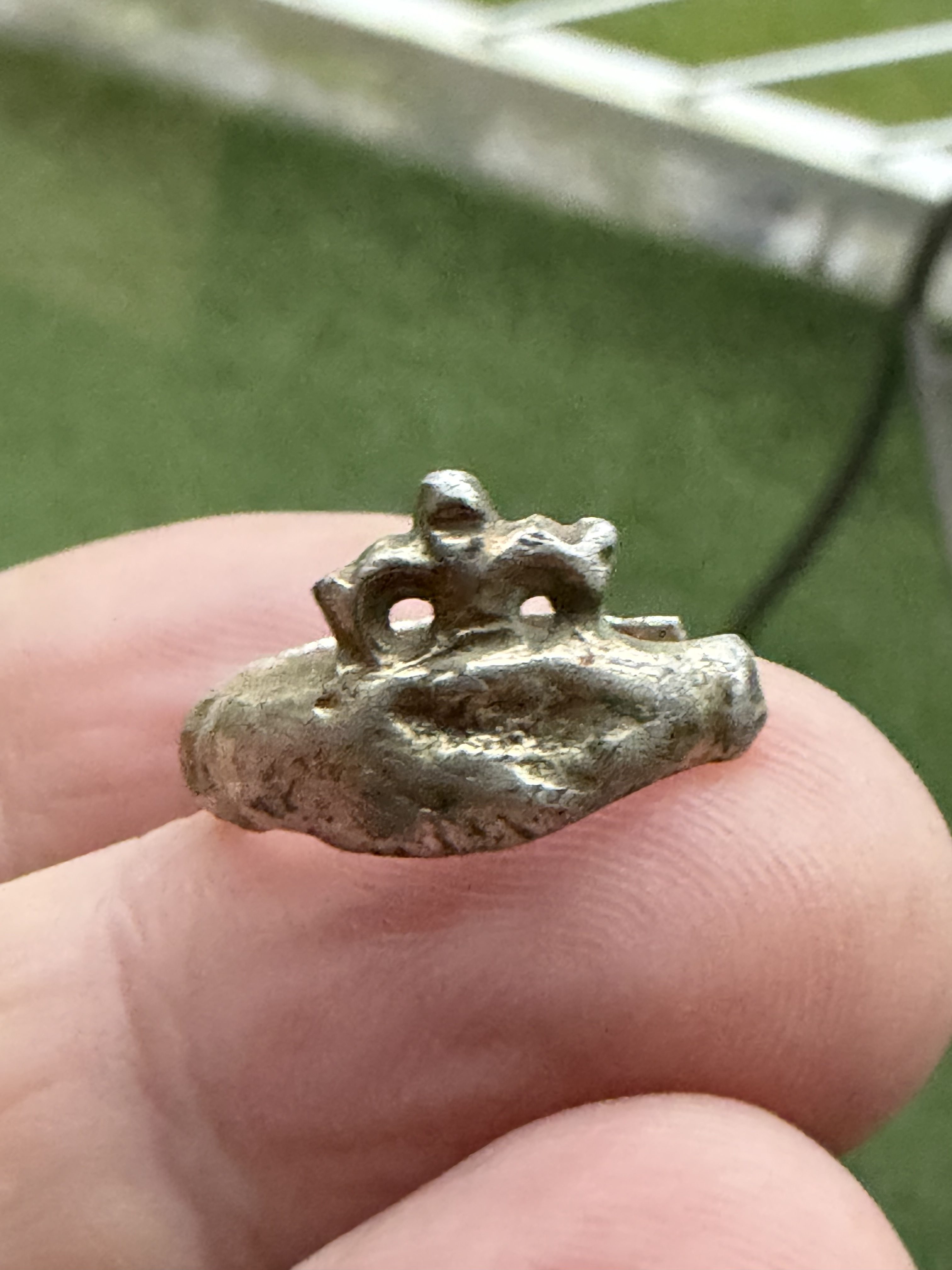
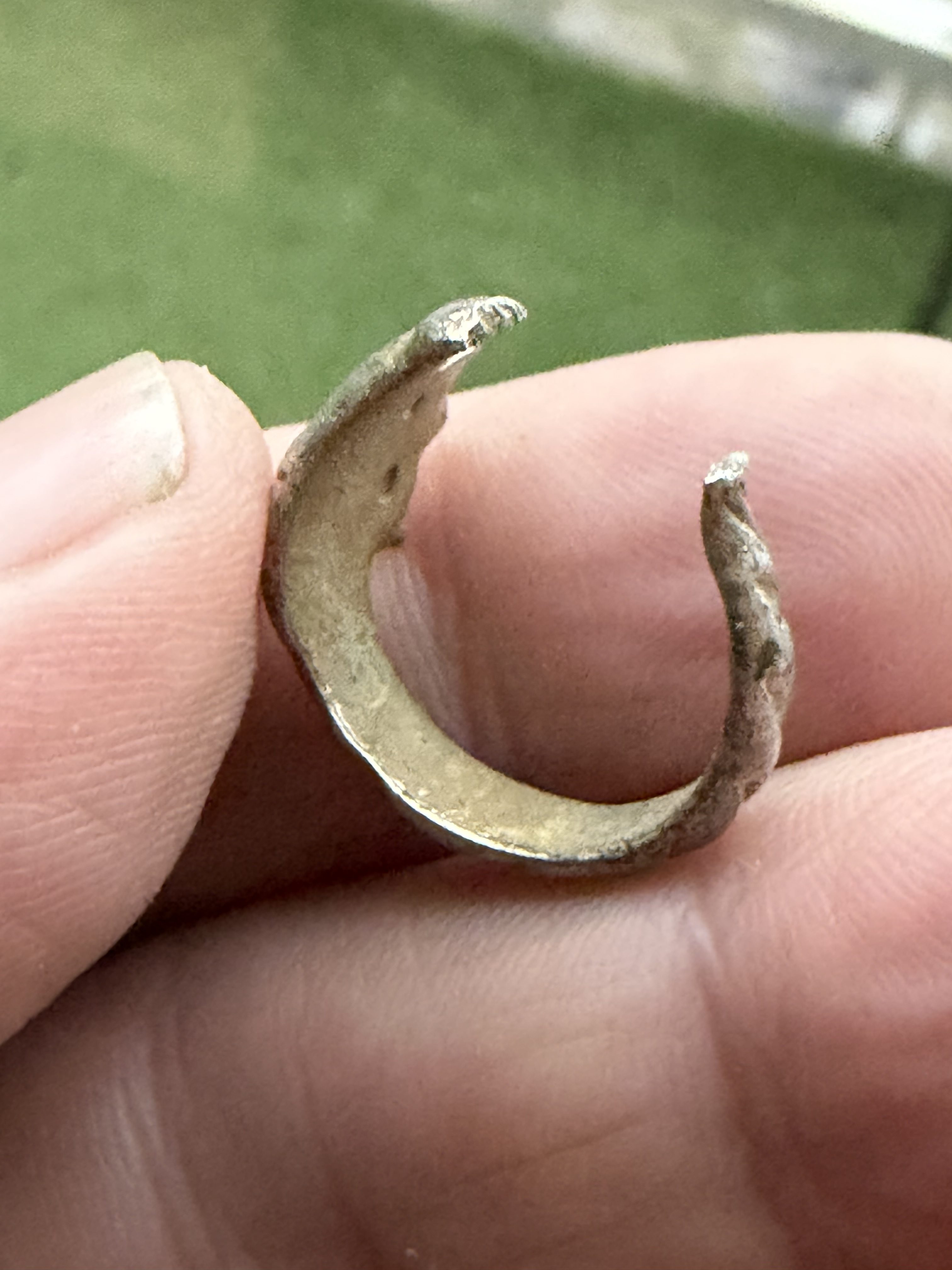
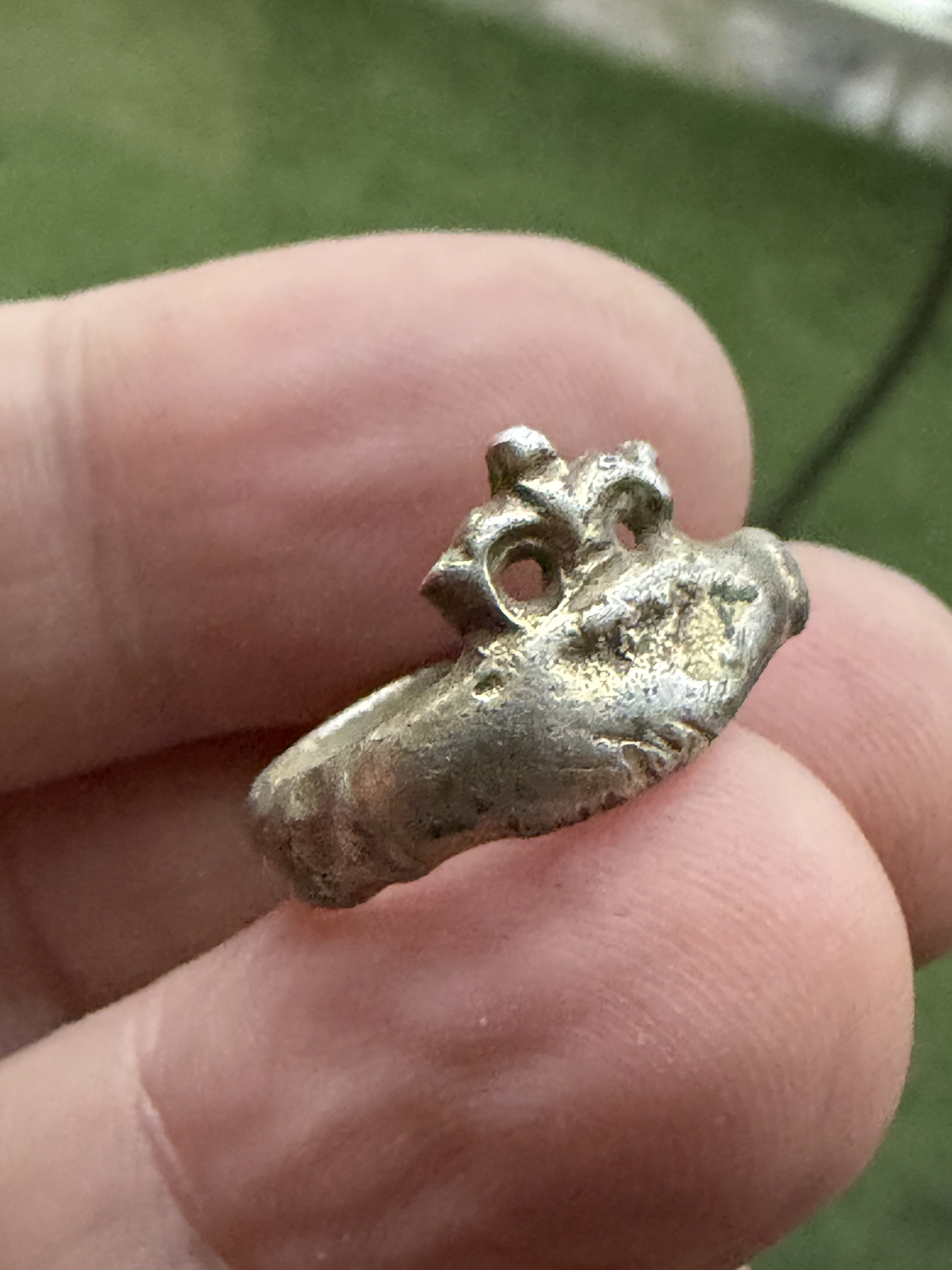
It dates to the 1400s and is recorded on the British Museum’s Portable Antiquities Scheme database here.
A transcript of the Finds Liaison Officer’s official report follows:-
Medieval incomplete silver gilt finger ring
PAS Database number: ESS-15018E
Date/Period: Medieval (15th century, c. 1400-1500. AD)
Finder: Mr Ian Huckle
Date of Discovery: 8th March 2026
Circumstances of discovery: Metal-detecting with permission
Description: An incomplete silver gilt finger ring (fede) of medieval date (c.1400-1500). The hoop is circular but now missing approximately one quarter, where it meets the bezel. The hoop is D-shaped in cross-section and decorated with deep oblique grooves. The bezel takes the form of two clasped hands surmounted by an openwork crown. Gilding remains within the grooves and crevices.
Measurements: Diameter: 20.6mm, Width: 11.5mm, Thickness: 2.1mm, Weight: 2.91g.
Discussion: Although finger-rings depicting clasped hands have been found dating from the Roman period up to the 19th century, they became especially popular during the 15th century (Scarisbrick and Henig 2003, 48), when they were given as symbols of love, marriage or betrothal and the name is taken from the Italian le mani in fede (hands in faith/trust).
The crowned clasped hand and ‘wreathed’ decoration on the hoop can be closely paralleled with British Museum SLRings.84, as well as further examples of silver gilt fede rings which feature crowns including AF.1114; 1865,0408.61 and AF.1113, the latter two of which feature black letter inscriptions. These features allow these examples, all in the British Museum collections, to be dated to the 15th century. A date of c.1400-1500 is therefore suggested for the example recorded here.
Conclusion: It is therefore likely that this object was at least 300 years old at the time of discovery. As the object is also made of more than 10% precious metals, it constitutes potential Treasure under the stipulations of The Treasure Act 1996.

