- My Third Mudlarking Trip
9th October 2026
Up at 4.00am to catch the early low tide and on the foreshore by 5.45am – I think you can tell by now I’m loving ‘larking about!!
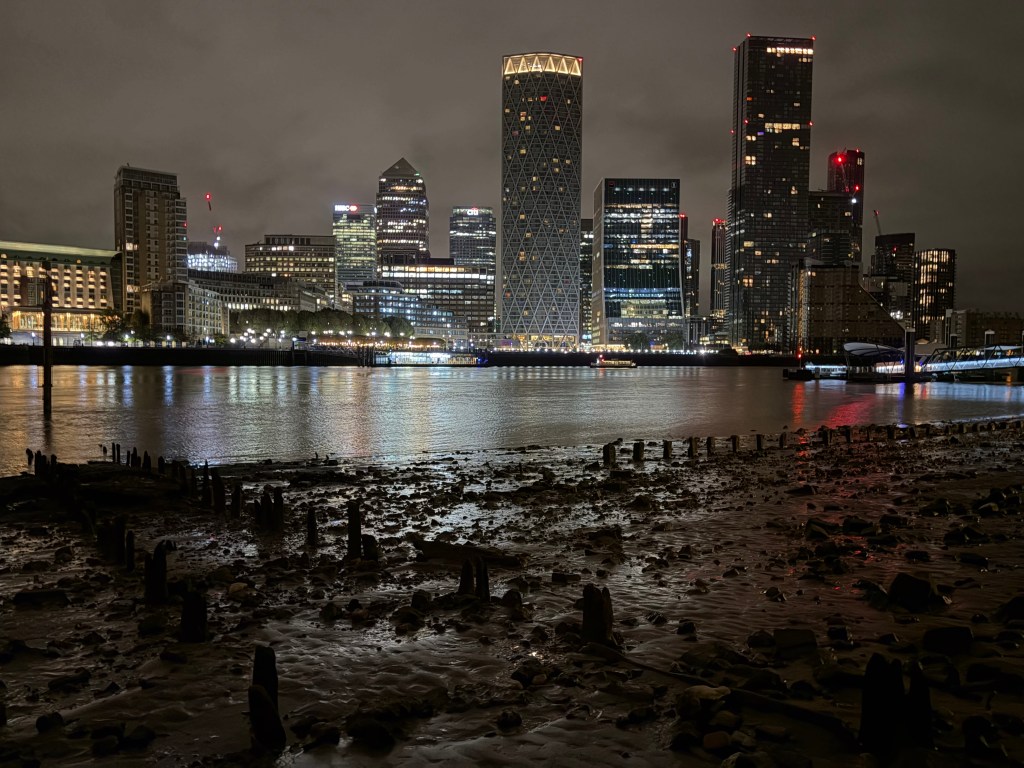
It was a completely different vibe to my previous (early evening and mid morning) trips. Empty roads and a sleeping London made the logistics a doddle and the foreshore looked great.
I was very excited to try out my new (small, elliptical and high frequency) detector coil which I hope will be more conducive to the iron rich foreshore environment. Time will tell, of course, but the early signs are good, with the detector much more stable in these difficult conditions.
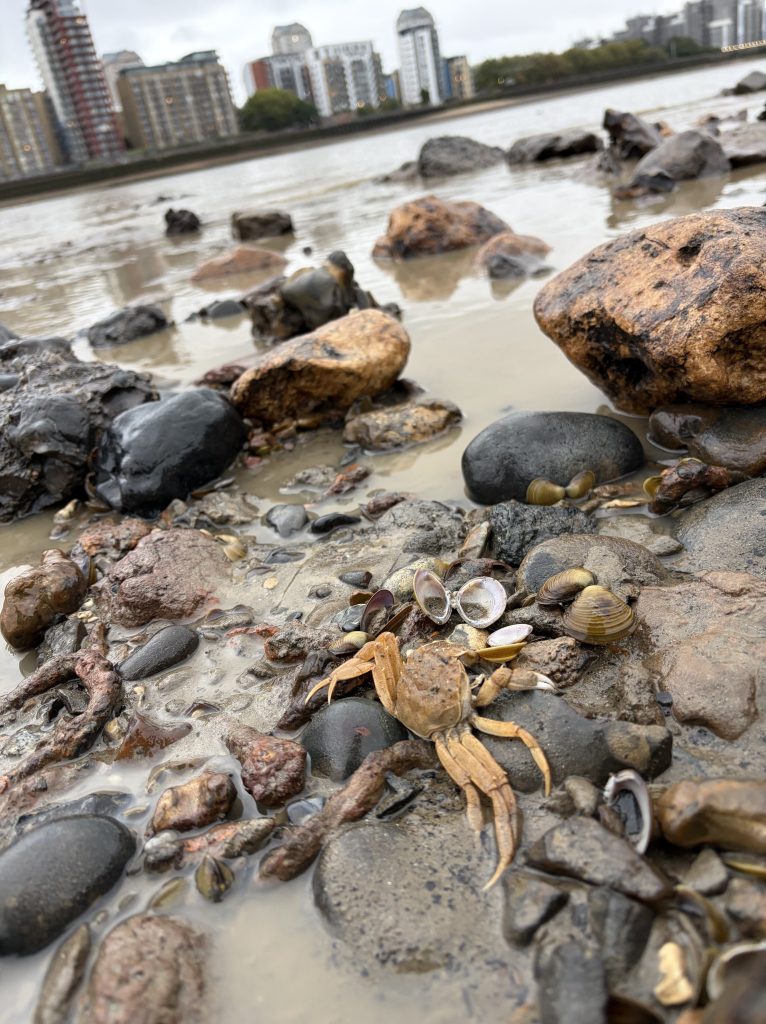
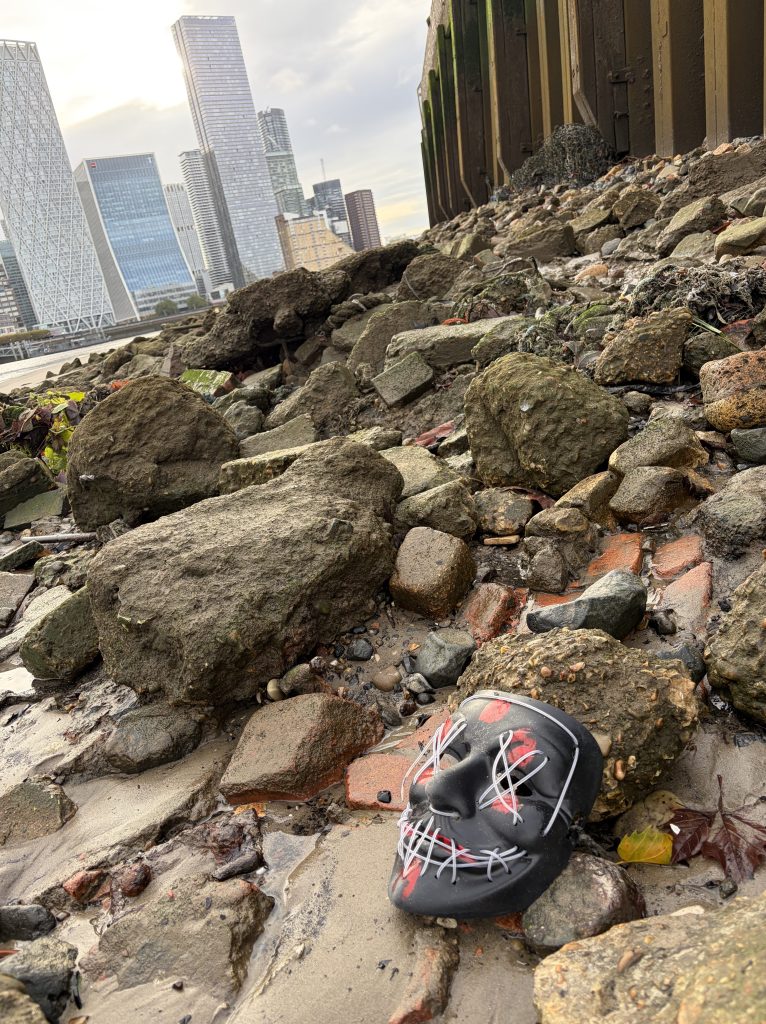
The city did eventually come to life, of course, and a few interesting sights came into view. Who knew the Thames was home to crabs? And I’m certainly hoping that mask was only part of a fun fancy dress affair and not something more sinister!!
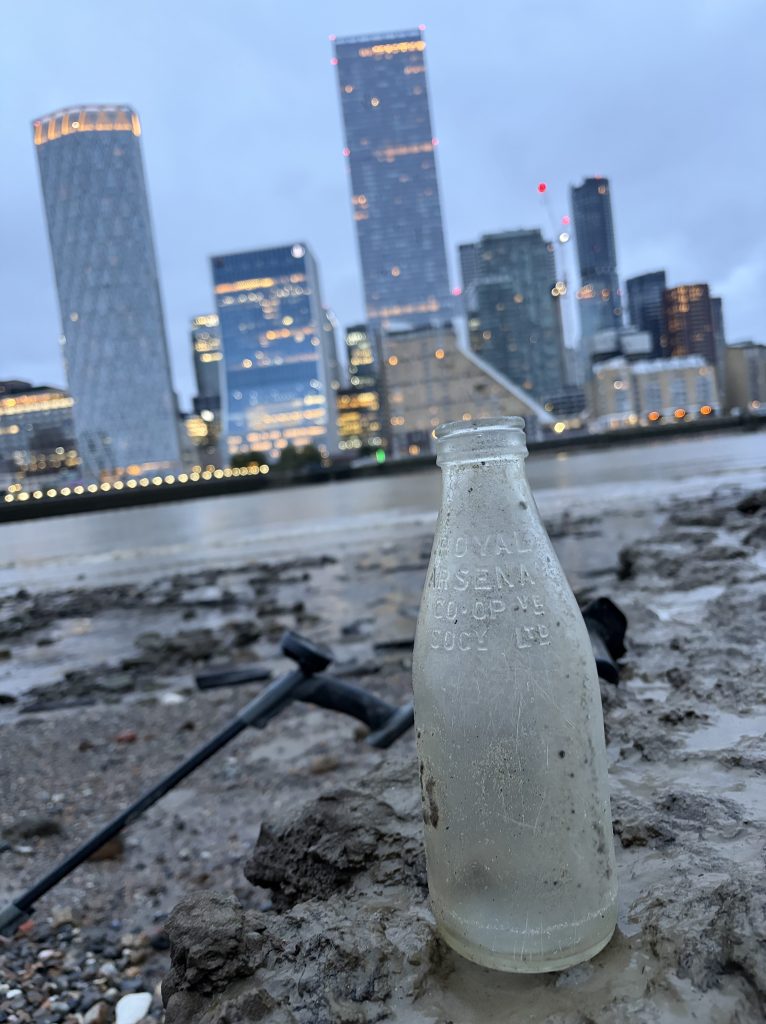
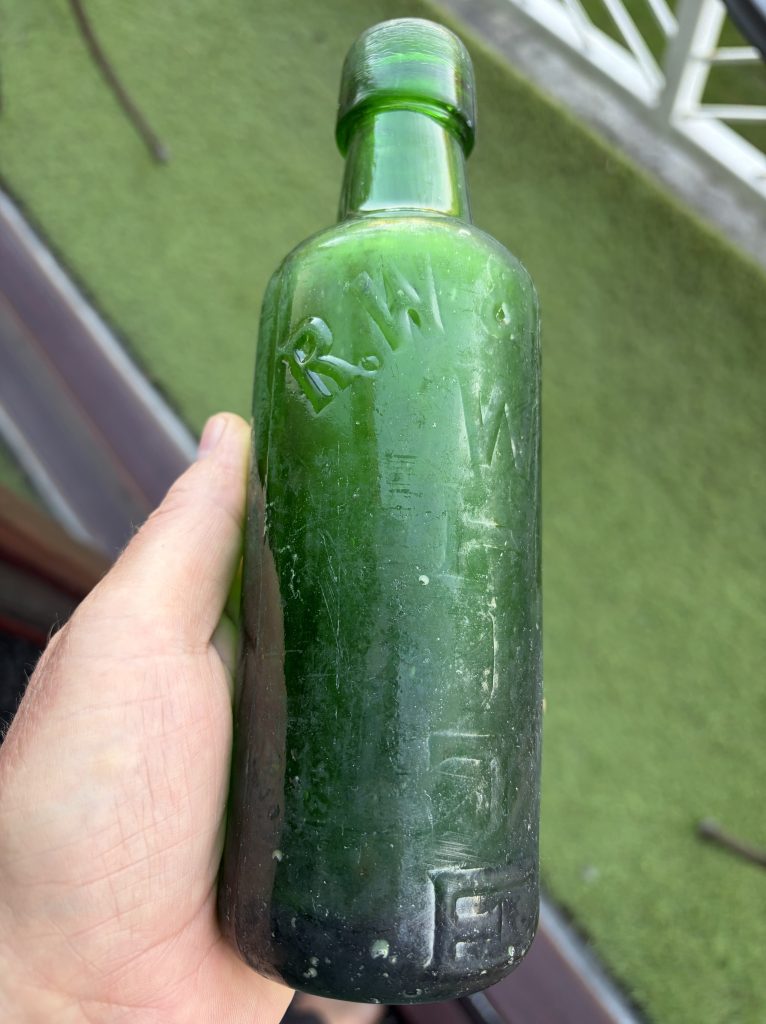
I was initially happy to find another intact bottle to add to the R Whites one from my first trip. The initial joy was tainted slightly for this Spurs supporter to find that it was from the Royal Arsenal but at least it was another reminder that they really are a South London team 😉
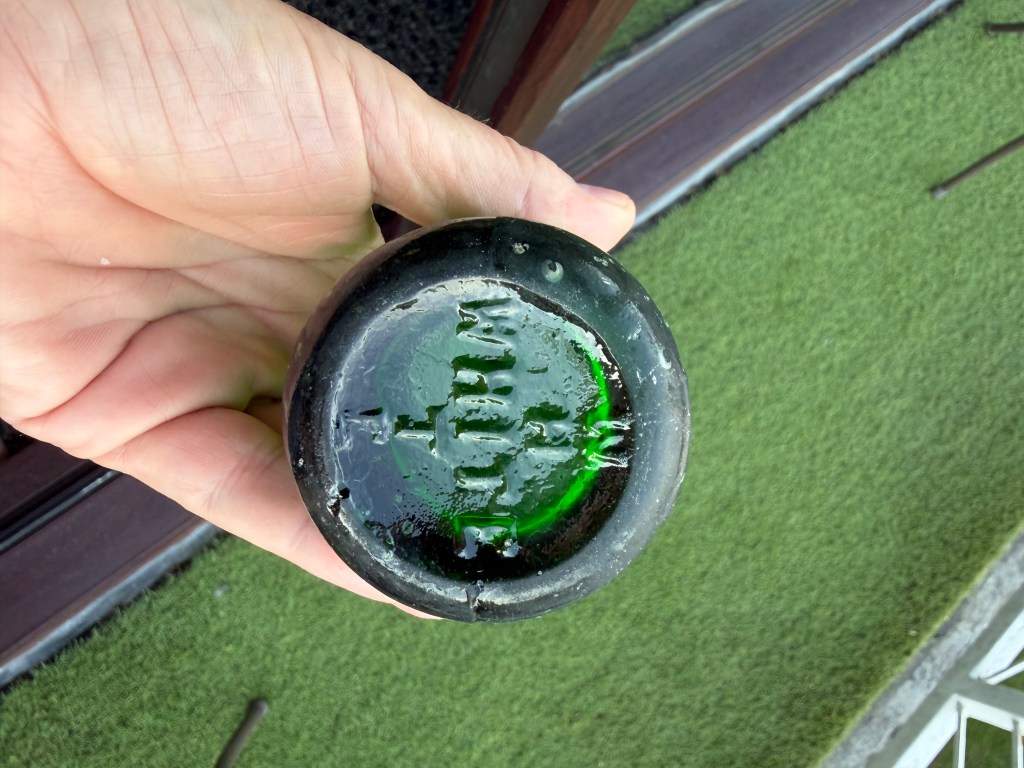
The glass is embossed with the Royal Arsenal Co-operative Society’s name, and there is a single letter W on the base, which may indicate that the glass manufacturer was Worksop glassworks.
I estimate that the bottle dates from around 1950 and would originally have contained milk.
The Royal Arsenal Co-operative Society was established in 1868 by workers connected with the Royal Arsenal and grew into a major local organisation, providing groceries, milk deliveries and many other services to the community.
It eventually merged with the national Co-operative Wholesale Society in 1985.
This humble bottle is a reminder of the everyday deliveries that once served local households and of Woolwich’s distinctive co-operative history.
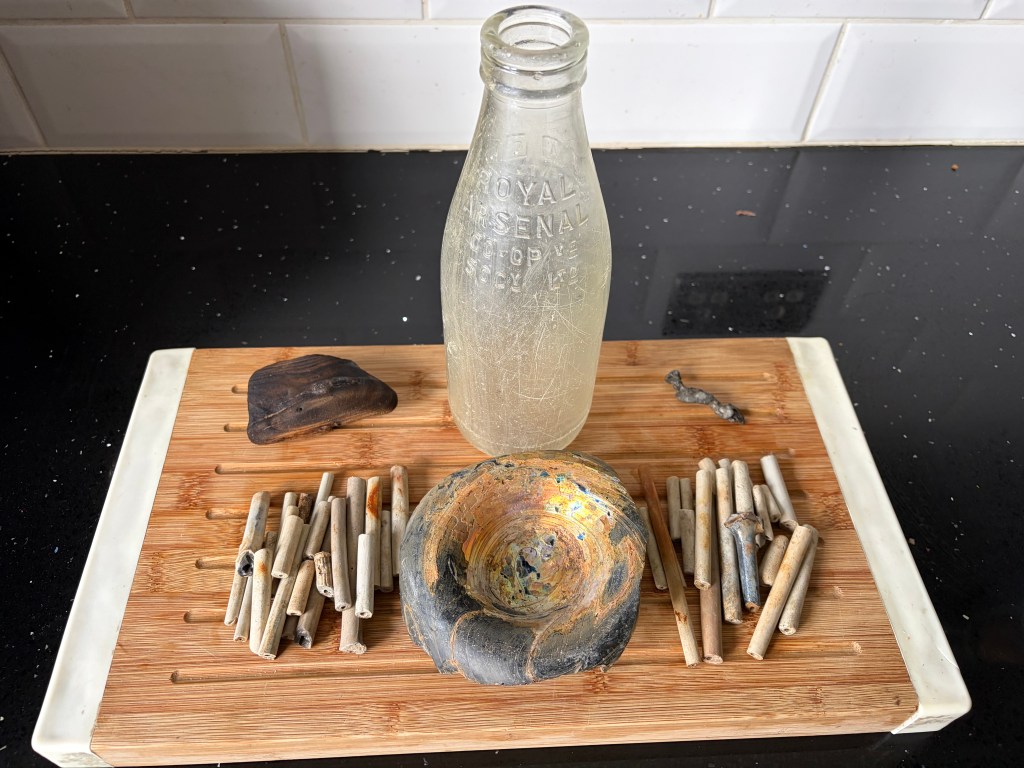
As you can see, I also decided to consolidate my growing collection of clay pipe fragments although have resolved only to bring complete ones home in future. Another pretty iridescent bottle base and a couple of random bits of wood and metal completed the haul.
I’m already looking forward to next time!!
- My Second Mudlarking Trip
(this time alone!!)
1st October 2026
The day didn’t start well. A massive traffic jam around Limehouse meant my 1 hour journey took nearly 3 and I only managed a couple of hours before the tide came in.
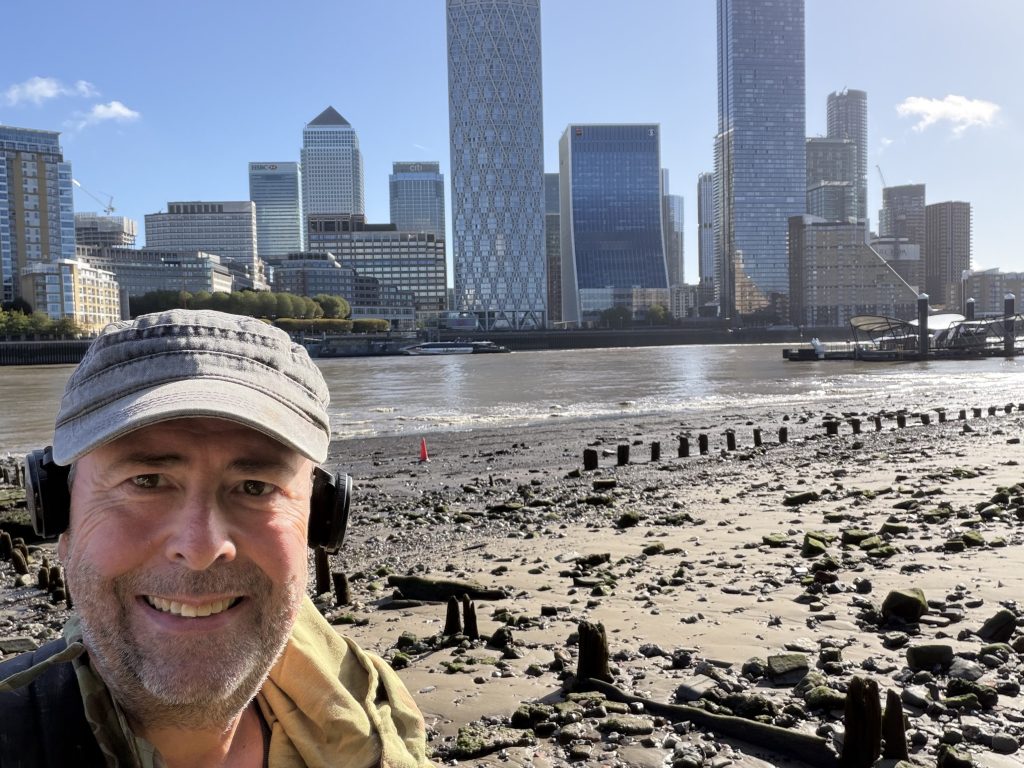
I went to the same stretch Joe showed me. I thought it would be sensible to make my first solo session somewhere I know.
The weather was great and the tide was out.
Bring it on, I thought.
Still finding it tough getting my detector stable in such an unusual environment, I put it to one side and concentrated on eyes only.
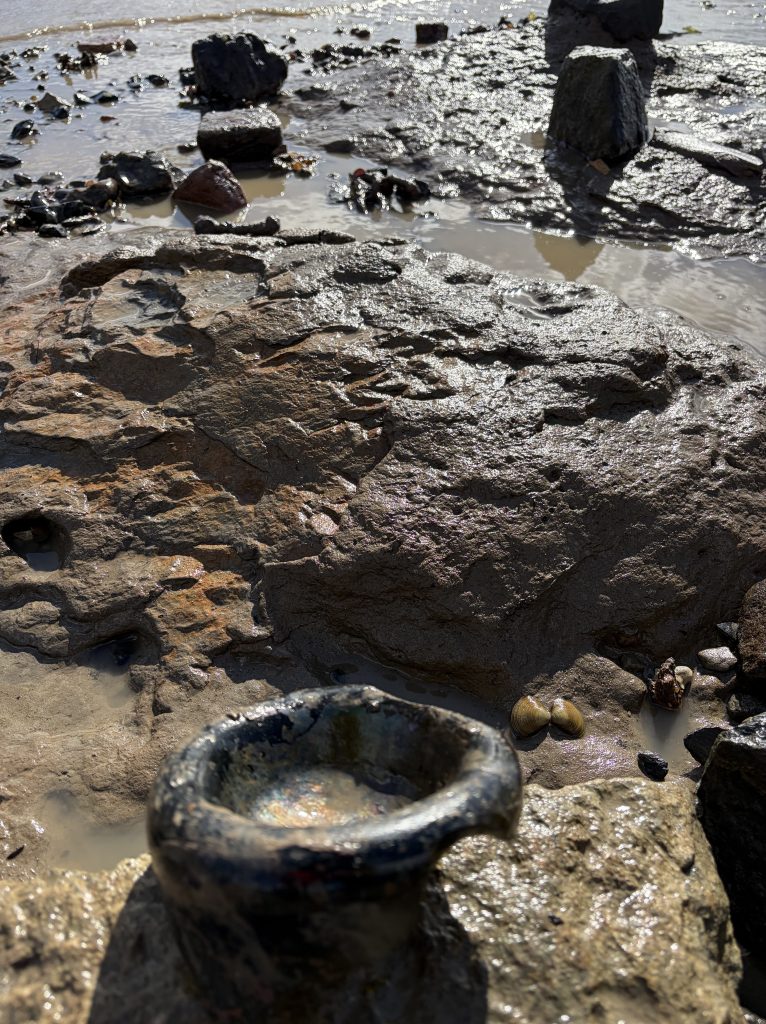
It wasn’t long before this beautifully iridescent bottle caught my eye, glinting in the sun and into the bag it went.
I didn’t bring much home this time.
I left most of my finds on the foreshore, conscious of the look I would probably get if I brought home another bag of broken pottery, china and glass!!
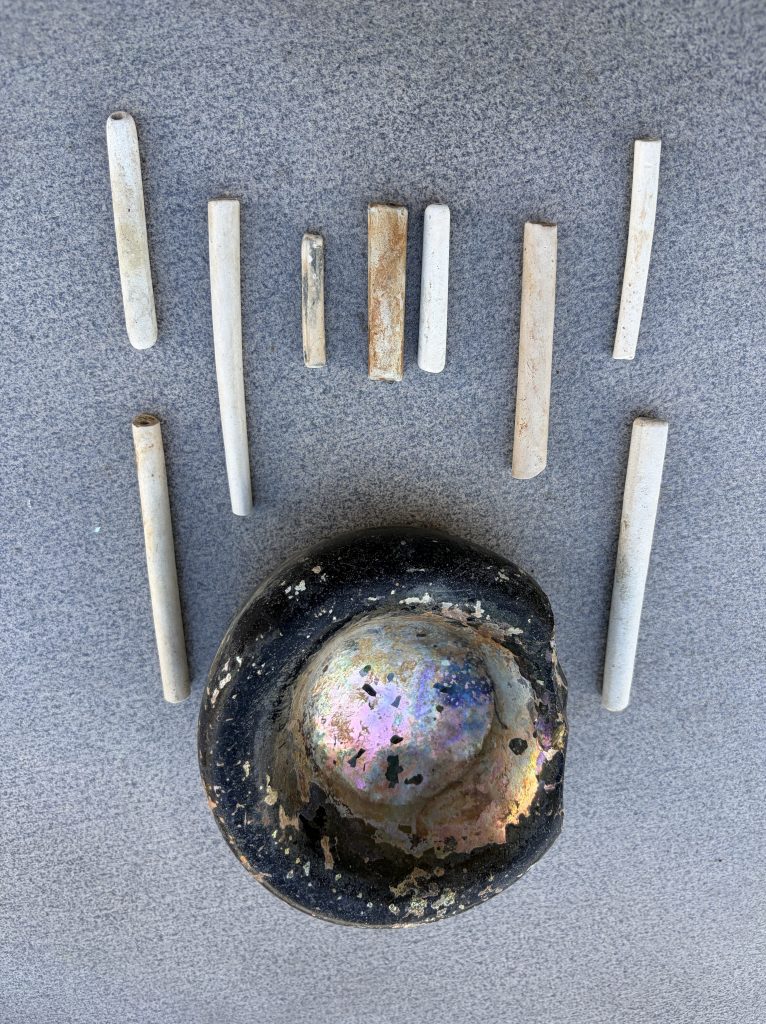
I couldn’t resist keeping that bottle base though and a handful of broken clay pipes.
The more I venture into this slightly strange hobby of Mudlarking, the more I love it.
It’s not about finding stuff, although finding stuff is always nice.
It’s much more about the adventure and the other-worldly vibe of the Thames foreshore – a place where one of the biggest cities in the world feels light years away although is actually just a few yards away!!
I will definitely be back!!
- My First Evening Mudlarking
25th September 2026
Last night I finally got onto the Thames foreshore for my first proper evening of mudlarking.
I’ve been looking forward to this for quite a while, and although I’ve done plenty of research and spent a fair amount of time thinking about what I might find, there’s nothing quite like actually standing down there on the foreshore as the tide goes out.
And I certainly wasn’t on my own. A new mudlarking friend, Joe, was with me, and his help and advice throughout the evening were invaluable, pointing things out and sharing some of the things he has already learned.
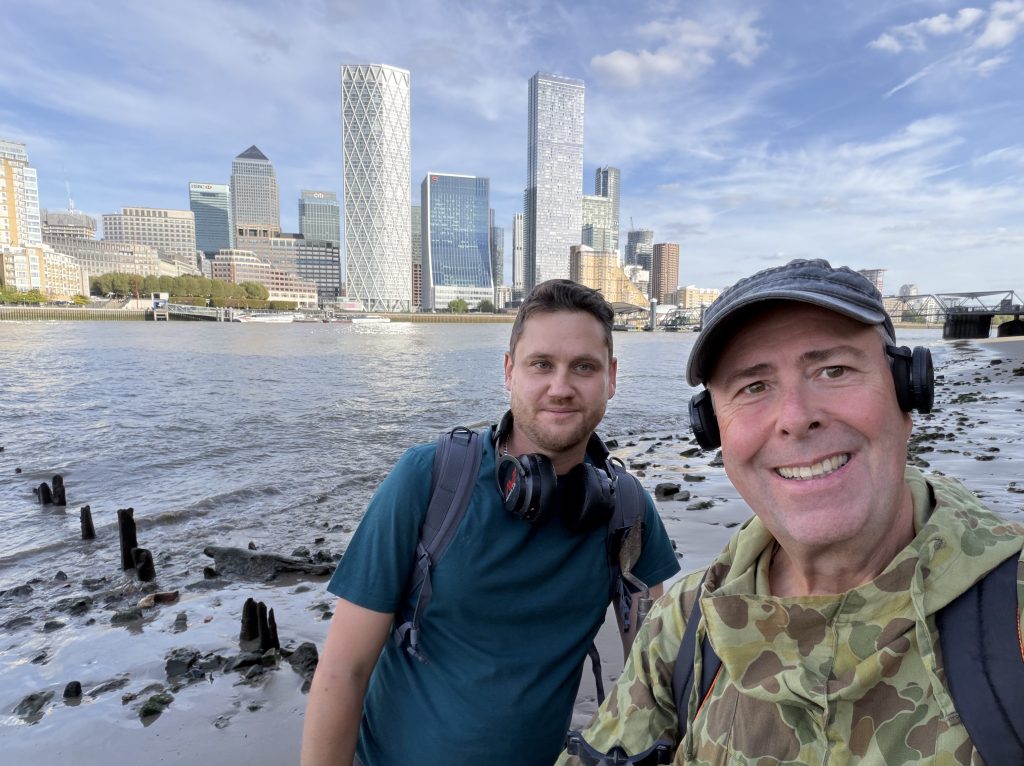
Having people who know the foreshore so much better than I do has made a real difference. I’m still very much a beginner, but I’m starting to get a feel for what I should be looking for and, importantly, how to stay safe while I am out there.
The other-worldly Thames
There is something slightly other-worldly about standing on the Thames foreshore as the light begins to disappear. The modern city is still there — the lights, the buildings and the constant movement — but down on the mud it somehow feels a million miles away.
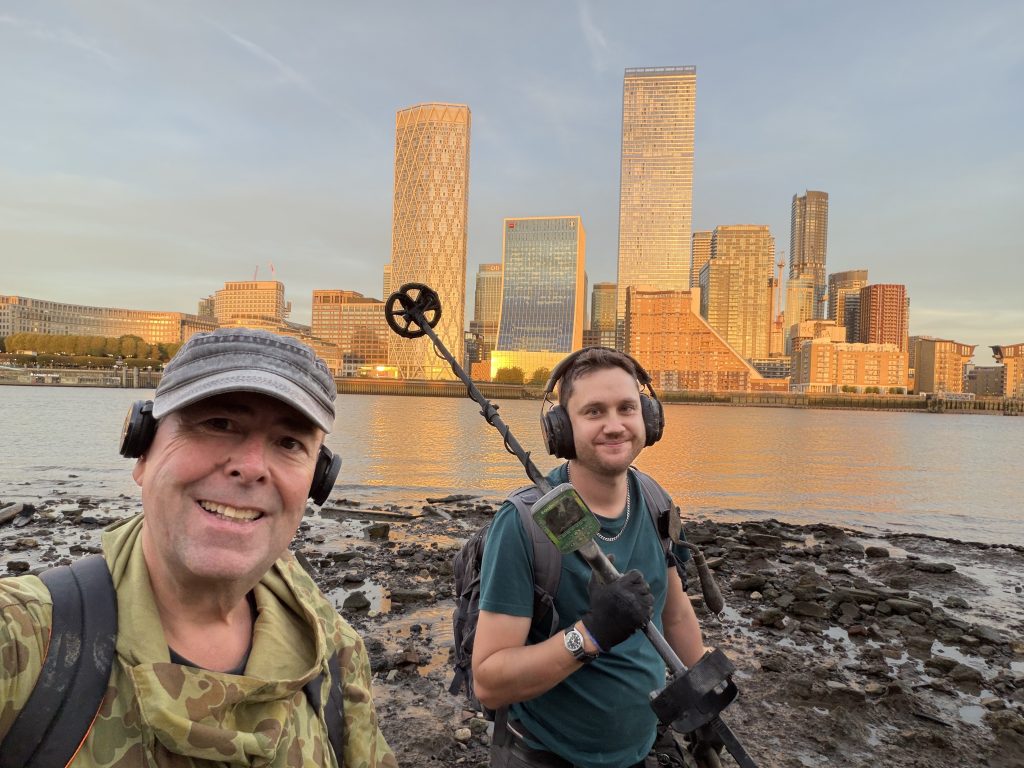
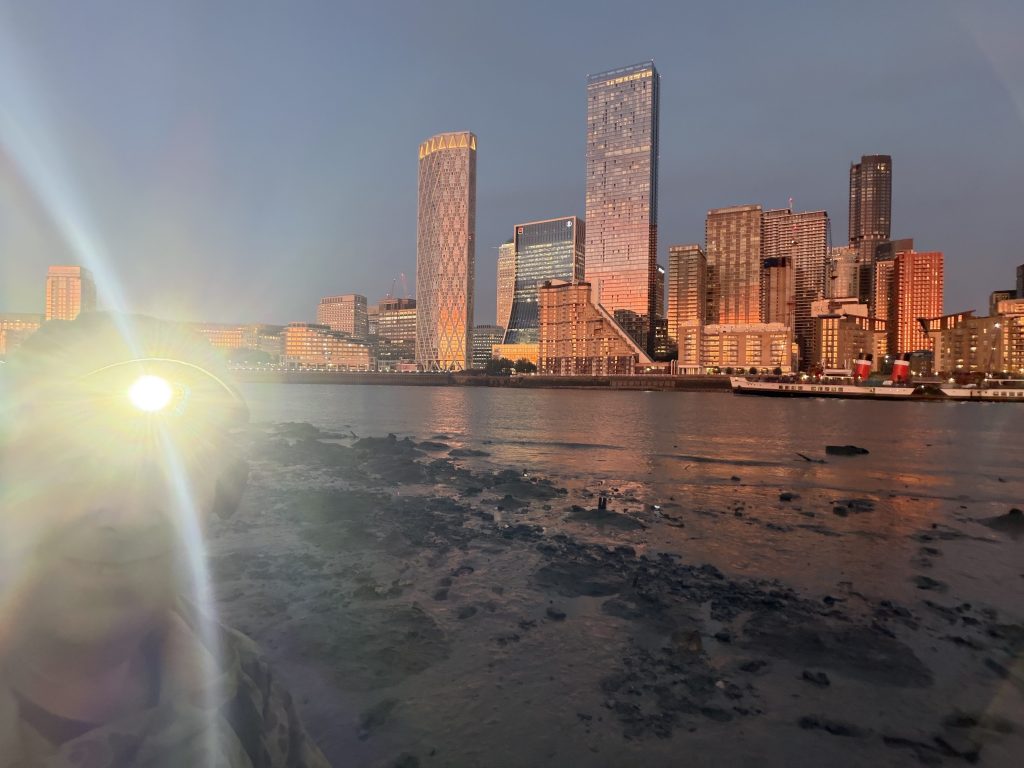
We were very lucky with the weather. The evening was calm and warm, and as the sun began to set, Canary Wharf was transformed by the changing light. It was one of those evenings when you find yourself spending as much time looking around as you do looking down.
And then there was the mud. Quite a lot of it, as it happens! It’s amazing how quickly you become absorbed in what is beneath your feet, trying to work out whether the next little glint or shape is something interesting or simply another piece of Thames detritus.
Getting my eye in
With the tide out, the foreshore seemed to stretch away in every direction. I spent a lot of time just looking, digging, searching and trying to train my eye to spot things that might otherwise have been overlooked.
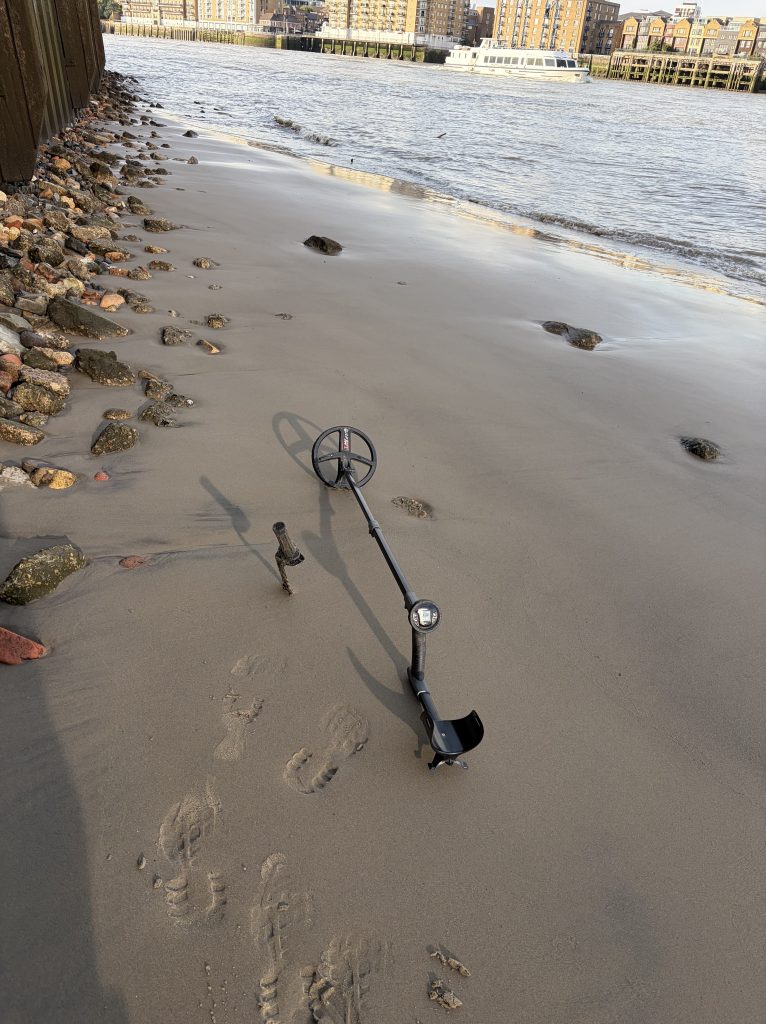
I’d brought the Deus II with me, although I wasn’t sure how useful it would be in such an iron-infested environment. In the end I did give it a try, keeping the settings fairly fast so that I could separate targets as best I could. Whether I’ll use it regularly on the Thames remains to be seen — there is certainly plenty going on under the coil!
And what did I find?
Well… not a great deal to be honest. Certainly not enough to trouble the local Finds Liaison Officer (FLO) on this occasion.
There were plenty of bits and pieces to keep me occupied — fragments of glass, pottery, clay and all sorts of other bits of Thames history. I brought a few things home to have a closer look.
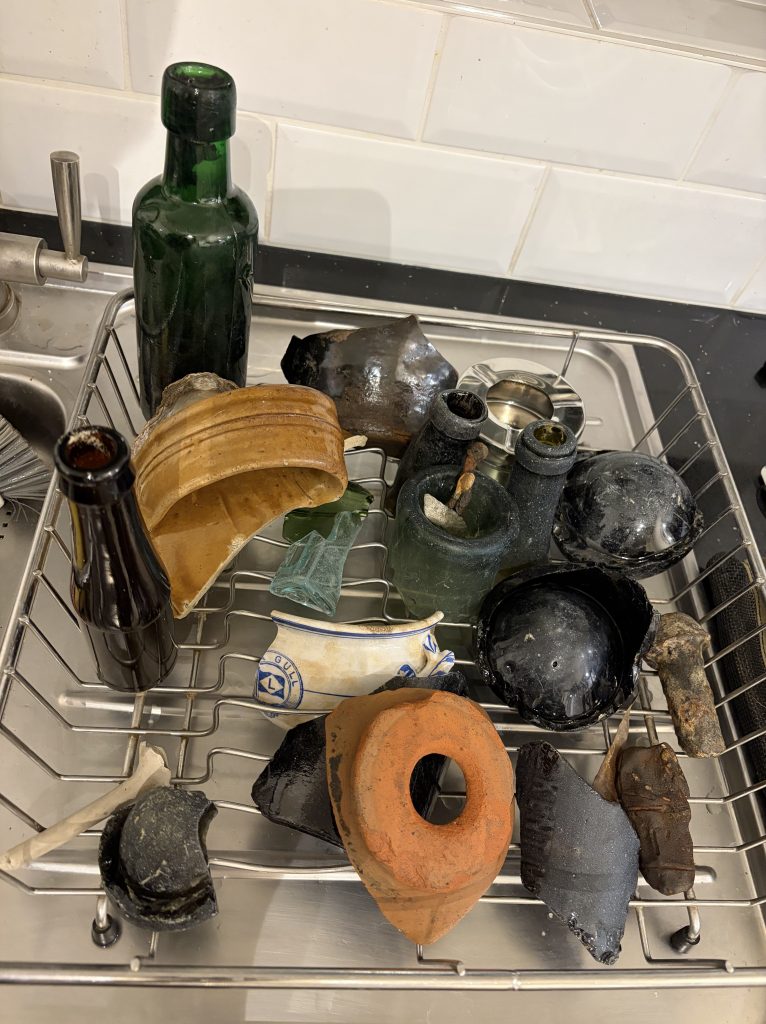
I was happy with the complete early 1900’s R Whites bottle although, in the spirit of full disclosure, Joe actually spotted that one!!
It stands about eight inches tall and weighs an impressive 610 grams. R. White’s was a well-known British soft drinks manufacturer, founded in London in 1845.
This bottle has an unusual internal screw thread, designed for a stopper that fitted inside the neck. I estimate it dates from around 1900, although it could be a little later.
My best guess is that it originally contained lemonade, although R. White’s also produced ginger beer and a range of other fizzy drinks. It’s fascinating to think that this bottle may have been lying in the Thames for well over a century.
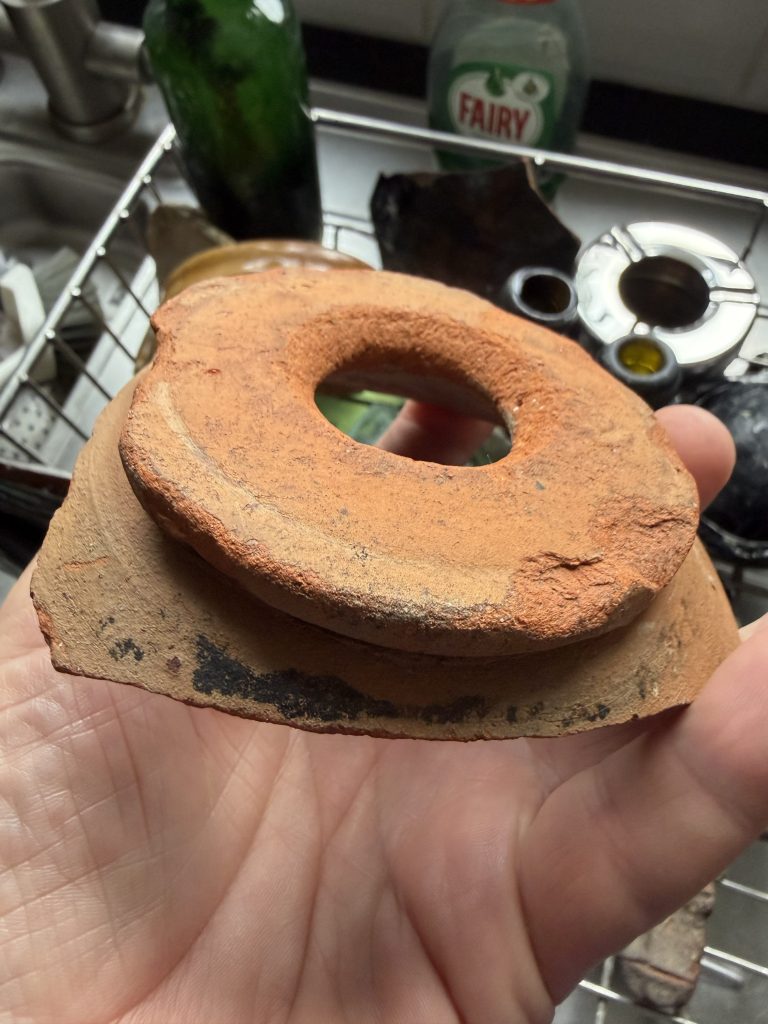
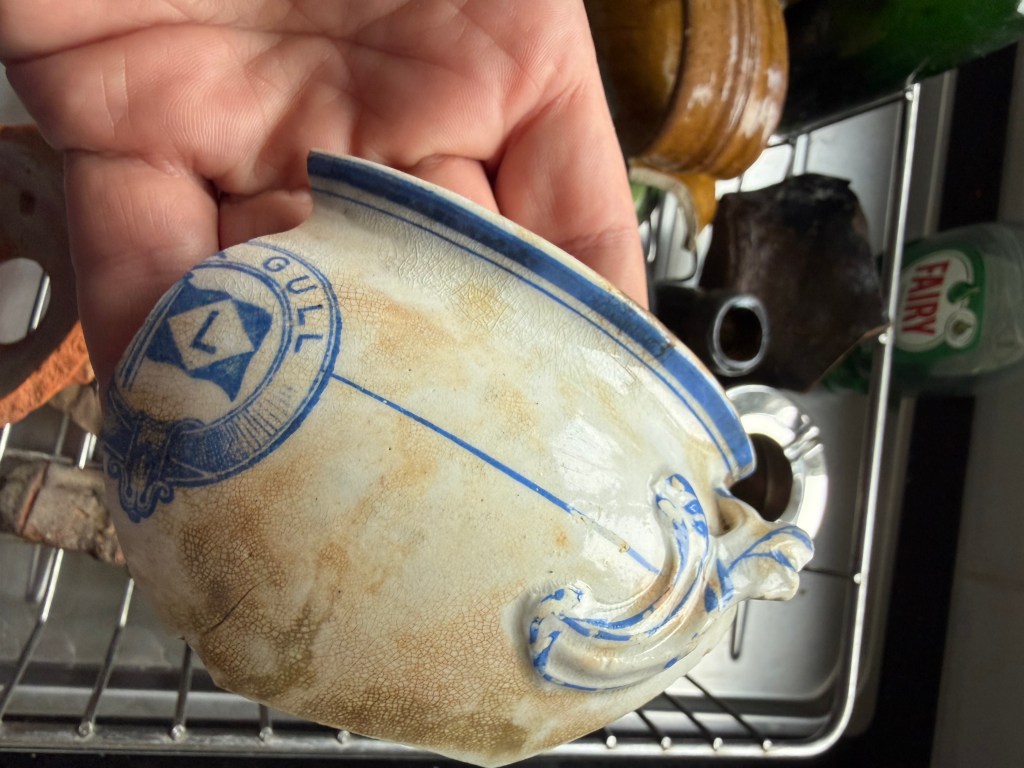
The red earthenware piece is the top section from an 18th century sugar jar. And that blue china fragment is from the Gull shipping line which likely dates to the 1960s.
But the lack of anything truly special really didn’t matter. I wasn’t expecting to find something spectacular on my first evening, and mudlarking isn’t just about the finds. It’s about learning to read the foreshore, working out what you’re looking at and gradually getting your eye in.
And I’m sure that, as I spend more time down there, some of those seemingly insignificant fragments will start to tell me their own stories.
A magical evening
As the evening went on, the light began to change. Canary Wharf started to glow as the sun dropped lower, and the whole scene became strangely beautiful.
I took a few photographs, but they really don’t do it justice. There’s something about standing on the foreshore, covered in mud, with the river in front of you and the lights of Canary Wharf coming on behind it, that makes the whole experience feel rather special.
Then Waverley appeared…
Just when I thought the evening couldn’t get much better, something rather special came sailing past.
The famous PS Waverley.
There was something wonderfully appropriate about seeing an old steamship passing along the Thames while I was standing on the foreshore thinking about London’s past.
Waverley was launched in 1946 and made her maiden voyage in 1947. She is now the world’s last seagoing paddle steamer, and remarkably she is still operating passenger cruises today. In fact, 2026 marks 80 years since she was launched.
Watching her glide past Canary Wharf, with the evening light catching the buildings behind her, was probably the highlight of my first night on the foreshore. Luckily, I managed to capture it on video.
My first evening on the Thames
All in all, it was a brilliant first evening. I didn’t come home with anything that needed reporting, but that really wasn’t the point.
I had great company, some excellent advice from Joe, plenty of mud, a beautiful sunset over Canary Wharf and the unexpected sight of Waverley sailing past.
I’ve got a lot to learn, but I think I’ve caught the bug.
This is only the beginning.
-
Subscribe
Subscribed
Have a WordPress.com account? Log in now.

