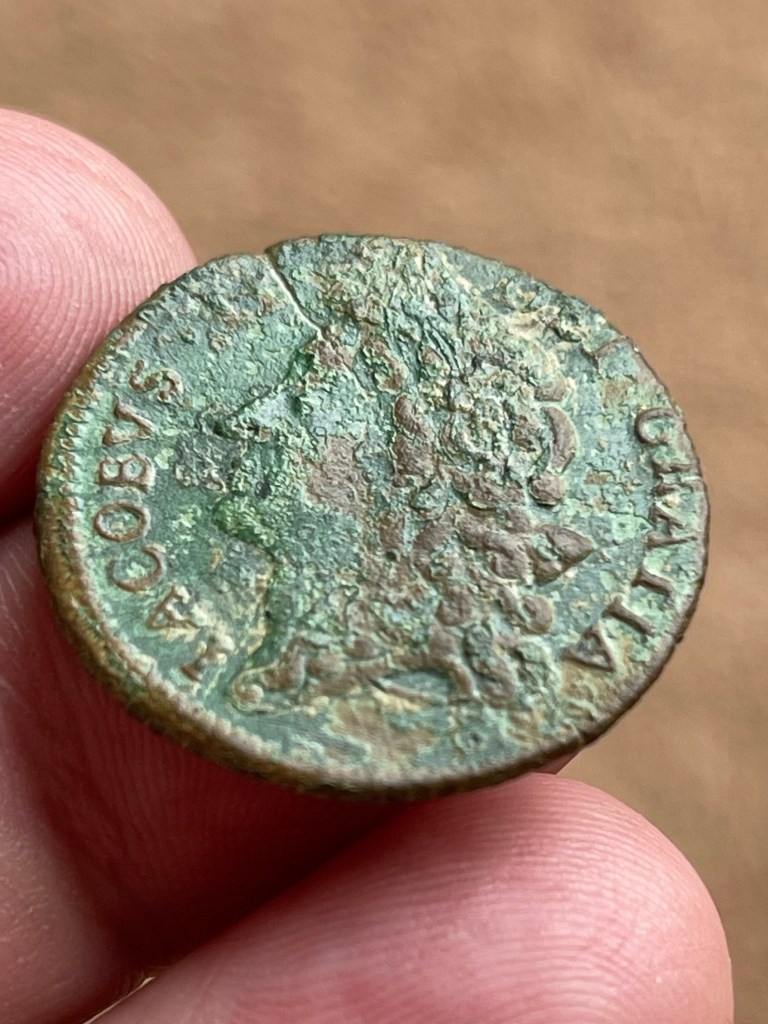
This is a very interesting coin, minted in Ireland during a particularly tumultuous time during English history.
James II’s “gunmoney” was an emergency Irish coinage issued during the Williamite–Jacobite War (1689–91). Deposed in England, James landed in Ireland to rebuild support and finance an army against William of Orange. Short of silver, his administration issued coins of base metal—mainly copper, brass, and pewter—to serve as circulating tokens, with a promise they would later be redeemed in silver if his cause prevailed.
The nickname reflects the tradition that metal was obtained from scrap, including old guns and cannon, though bells and other objects also supplied material. The pieces included sixpences, shillings, half-crowns, and crowns. They are especially distinctive because many bear both a year and a month: this was meant to establish the order in which they would be exchanged for silver after a hoped-for Jacobite victory.
That victory never arrived. After James’s defeat and the Williamite settlement, gunmoney was demonetised in 1691. Today, the coins are vivid artifacts of a financial emergency: physically humble, often crudely struck, but unusually rich in political history and highly collectible because of their denomination, month, die, and metal variations.
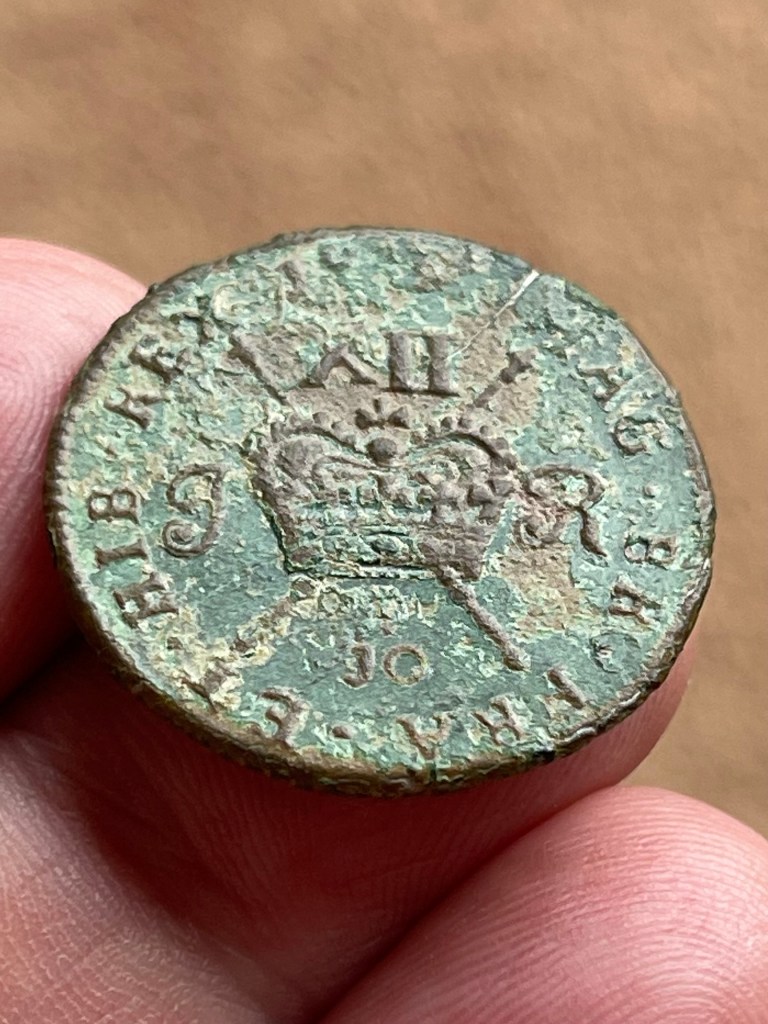
This particular coin, a shilling as represented by the XII (12 pence) on the obverse is quite rare as it was minted in Limerick (most of these coins were minted in Dublin) in December 1689. This is represented by the “10R” shown on the reverse, December being the tenth month of the year in the “Julian” calendar in use at that time.

