My First “Hammered”
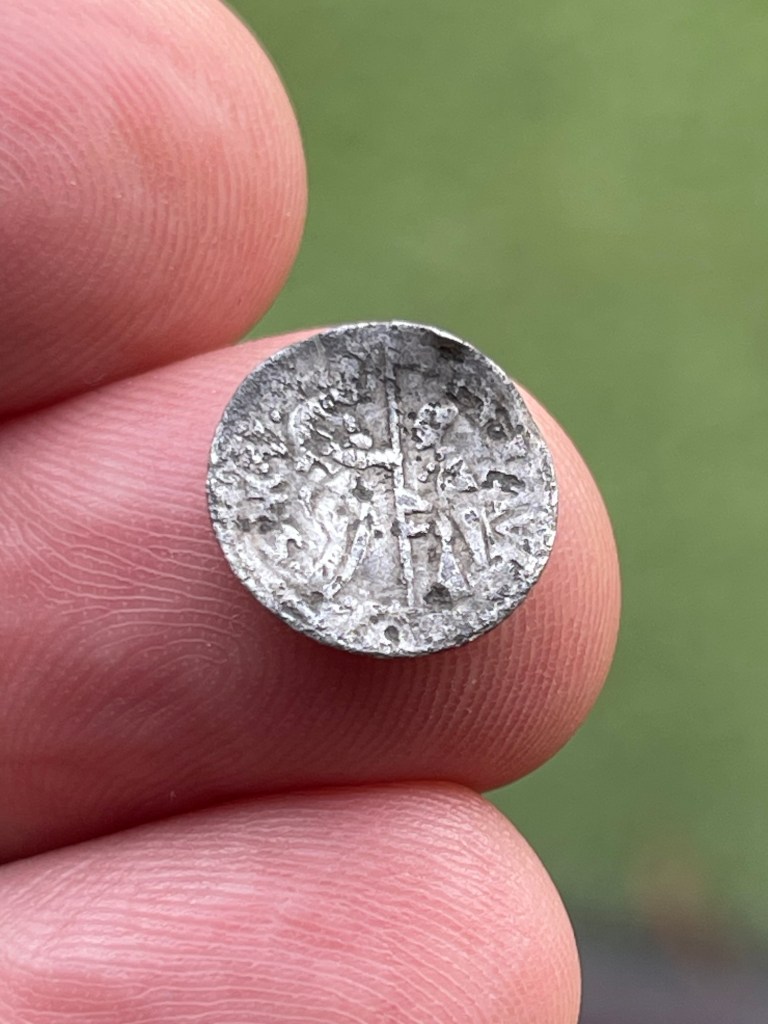
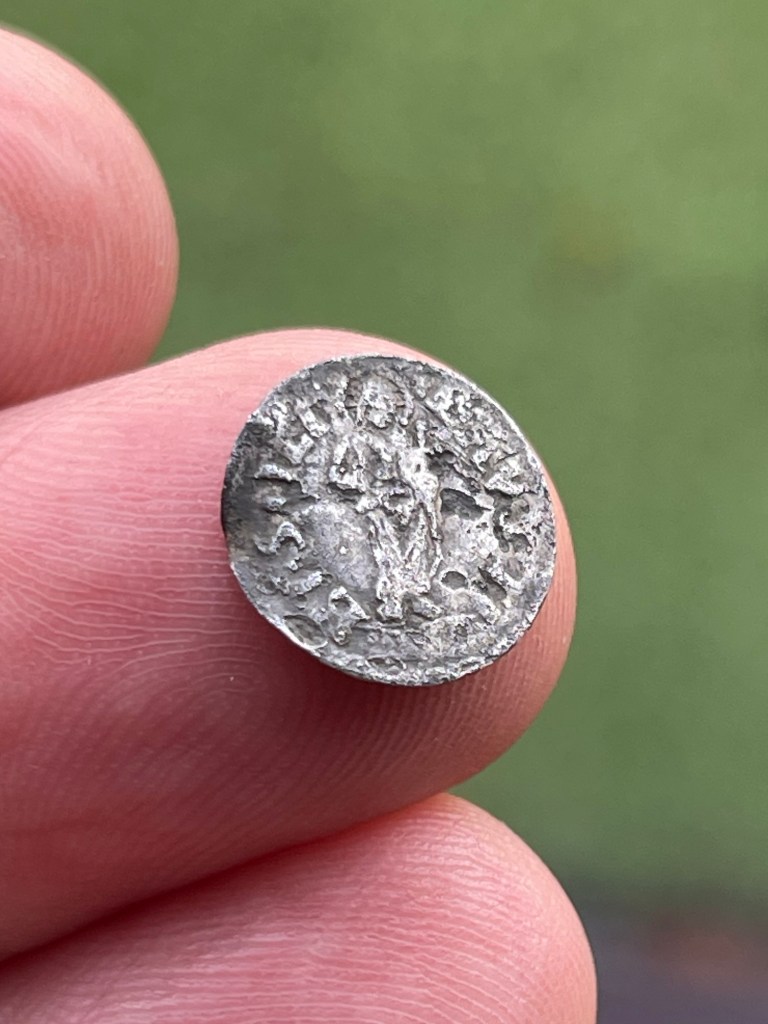
All detectorists remember their first “hammered”.
Mine was a rather special one – a tiny Venetian soldino, struck during the dogeship of Leonardo Loredan (1501–1521).
Soldini were small silver Venetian coins, only around 12–13 mm across, and were brought to England by Venetian trading ships. Because England suffered from a shortage of small change, they circulated here unofficially as halfpennies and became known as “galley halfpence” or galyhalpens.
The coin bears the distinctive imagery of Venice, with the Doge and St Mark on one side and Christ on the other.
My Oldest “Hammered”
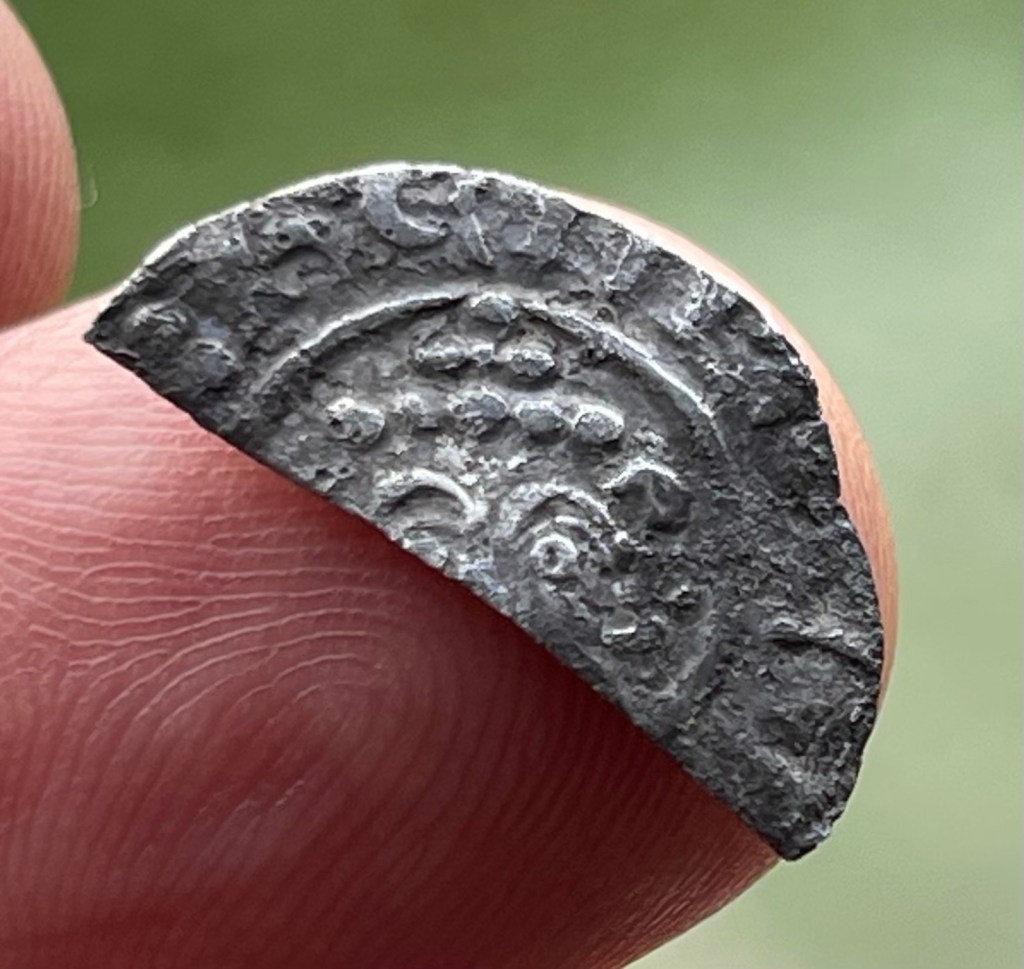
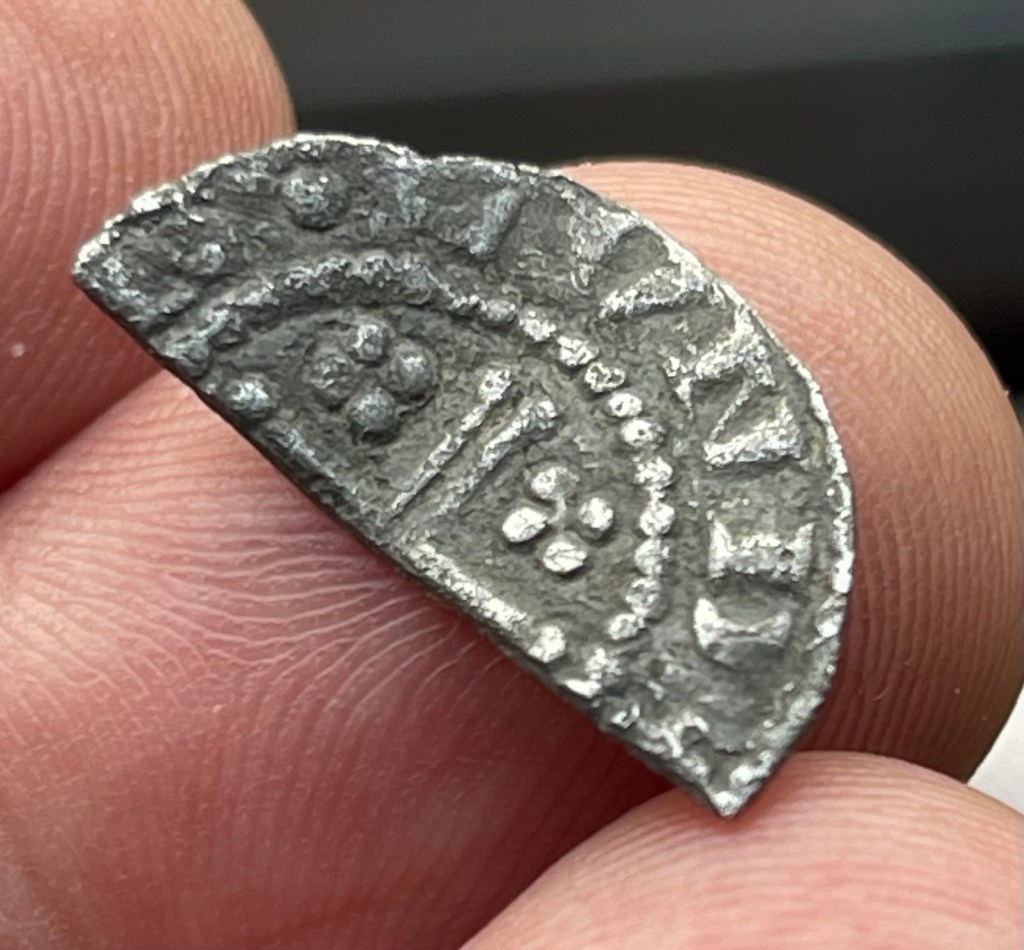
This is my oldest hammered coin, a cut halfpenny from the reign of Henry II (1154–1189). It belongs to the Short Cross coinage introduced in 1180, and coins bearing Henry’s name continued to be produced until 1189.
Cutting pennies into halves and quarters was a practical way of creating smaller denominations before purpose-made halfpennies and farthings were introduced. The cross on the reverse was particularly suited to this practice, allowing a penny to be divided into smaller units.
At more than 800 years old, this tiny piece of silver is one of the most tangible links in my collection to medieval England.
My Biggest “Hammered”
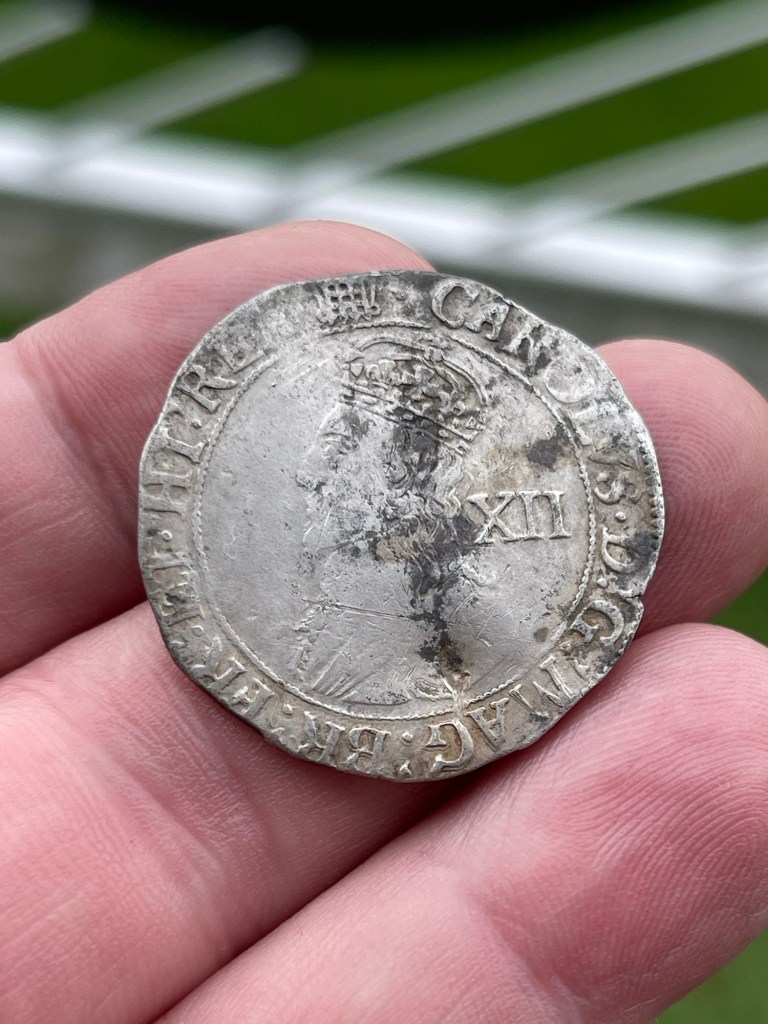
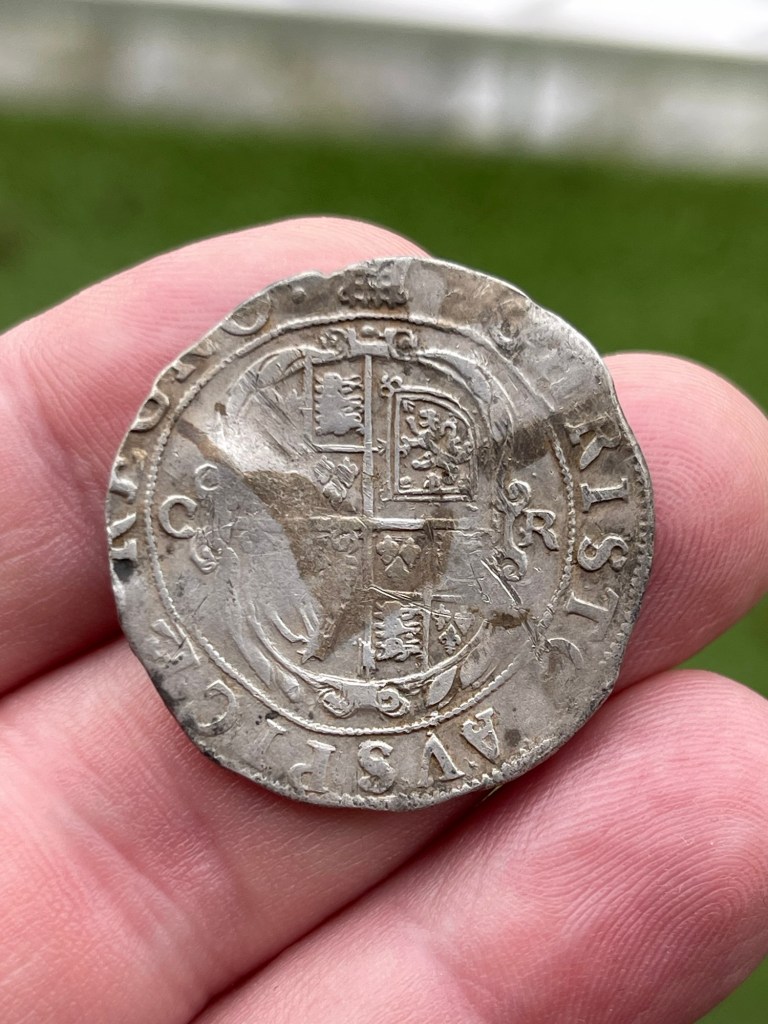
This is my largest hammered coin, a silver shilling of Charles I (1625–1649).
A shilling was worth twelve pence, and Charles I’s hammered coinage belongs to a particularly dramatic period of English history.
His reign encompassed growing political conflict with Parliament, the English Civil War and ultimately his execution in 1649. Unlike the tiny medieval halfpennies and foreign soldino, this substantial piece of silver would have represented a meaningful amount of money when it was struck. My fingers are pretty chunky so you can get an idea of the size of this coin from the photos.
Holding a coin like this today brings the events of the seventeenth century remarkably close to home — particularly when it has come directly from an English field.
My Favourite Patina
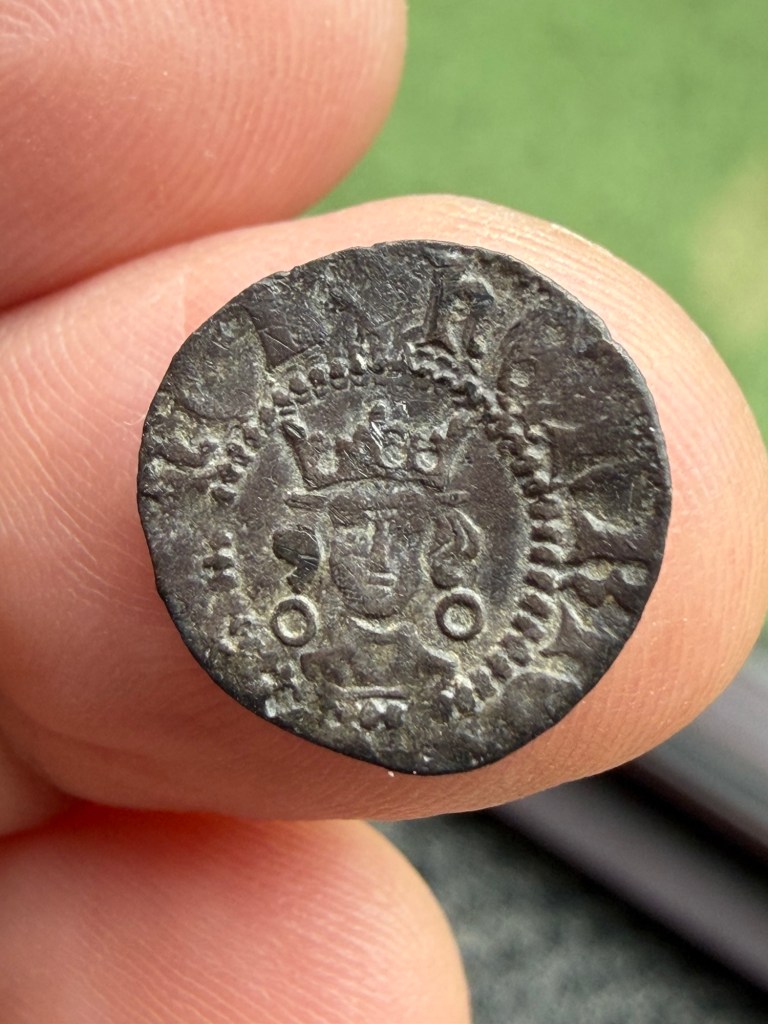
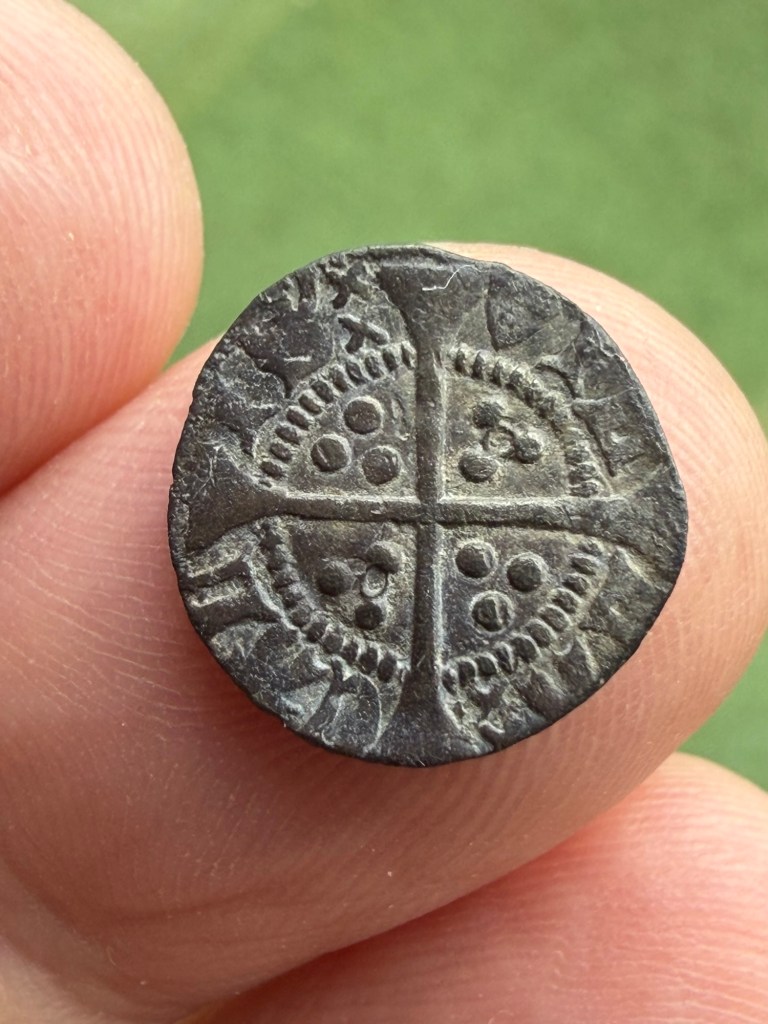
A patina is the surface colouring and texture that develops on a metal object over many years, often through natural chemical reactions with the surrounding soil and air. On ancient coins, it can produce beautiful colours and character, while also being a reminder of the centuries they have spent in the ground.
This Henry VI silver half-penny from the Calais mint is probably my favourite for its wonderful dark patina. It dates from the first reign of Henry VI (1422–1461), when Calais was an English possession and an important mint.
Calais-issued coins are particularly interesting because they were produced in an English territory on the Continent. Calais had been English since Edward III captured it in 1347. It remained English until 1558, almost a century after Henry VI’s death.
My Most Unusual “Hammered”
aka Where’s the King Gone?
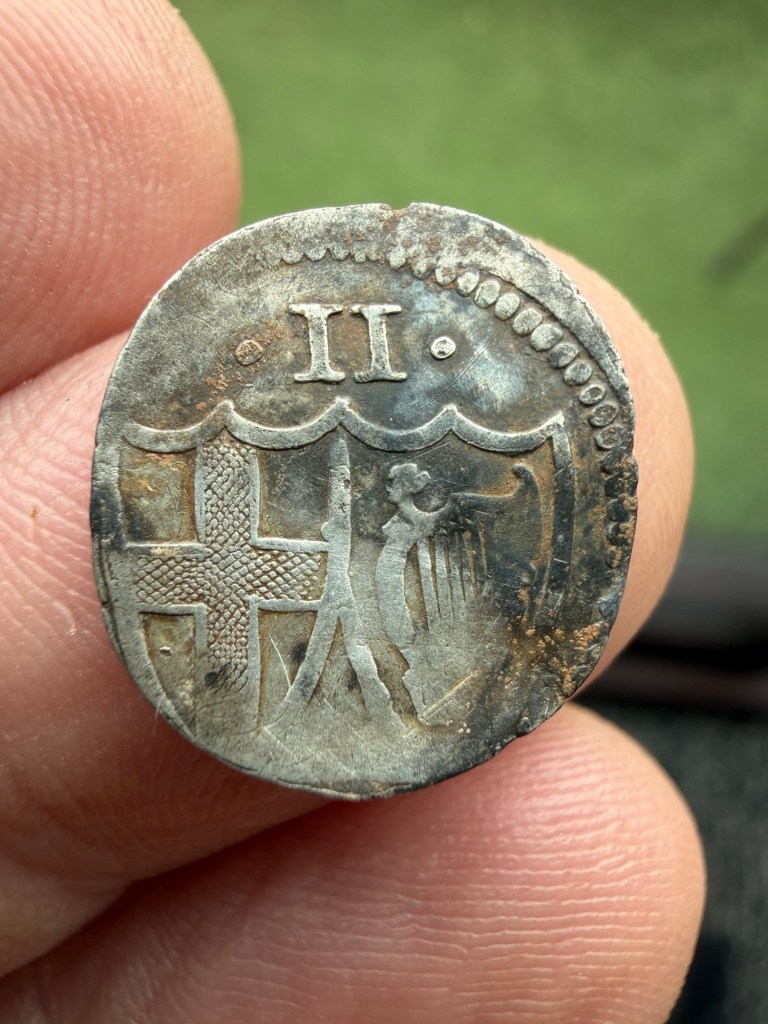
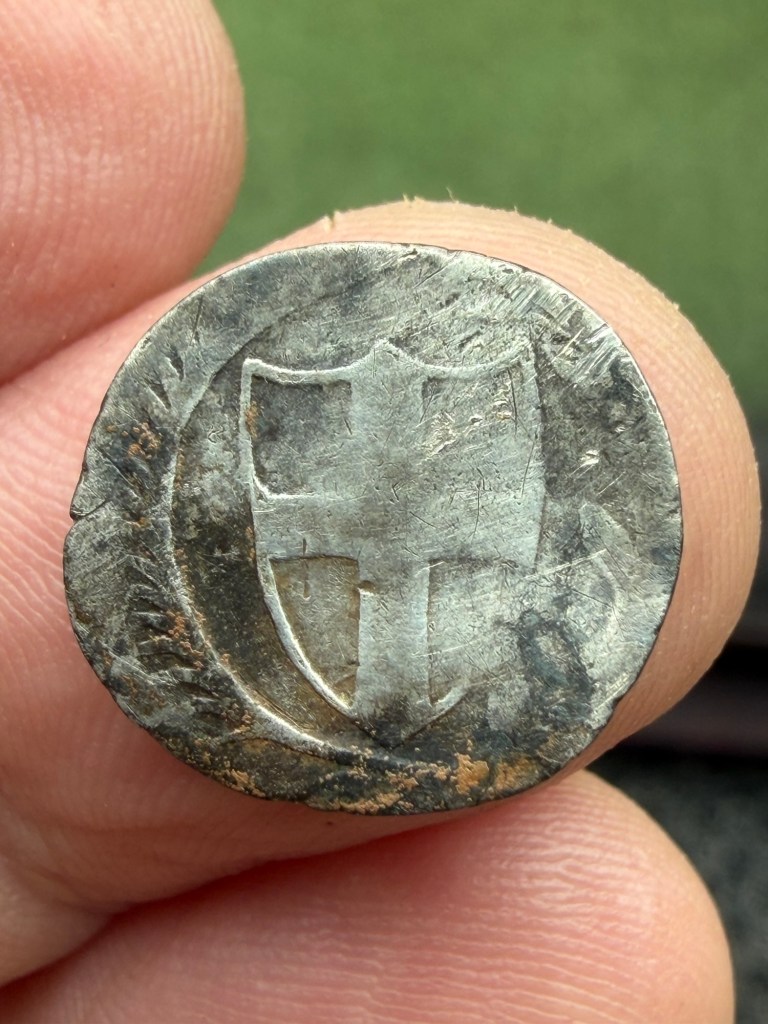
This is perhaps the most unusual of my hammered coins because there is no monarch on it at all.
It is a silver two-pence, or halfgroat, belonging to the coinage of the Commonwealth of England (1649–1660), the period following the abolition of the monarchy.
Instead of a king’s portrait, the coin carries the arms of England and Ireland and the denomination II. It is tempting to call it a Cromwell coin, and it certainly belongs to the political era associated with Oliver Cromwell, but technically the coin is Commonwealth coinage rather than specifically Cromwellian coinage;
Cromwell became Lord Protector only in 1653. It is a fascinating little reminder that, for eleven years, English coins were struck without a king’s name or portrait.
My Oldest Milled Coin
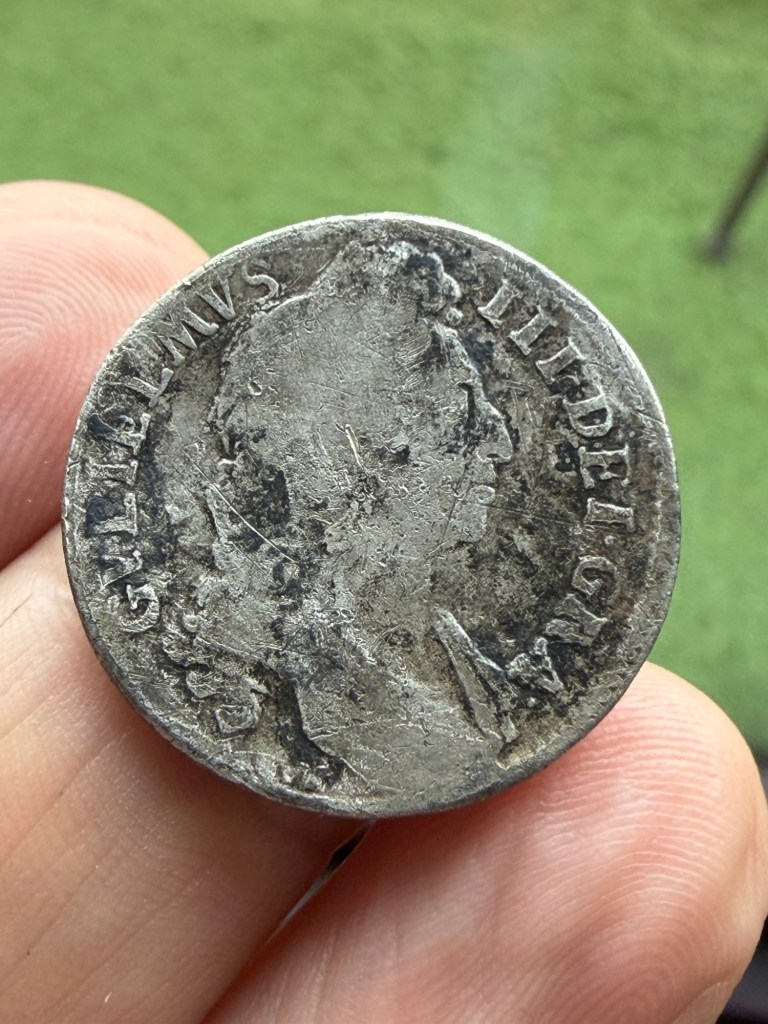
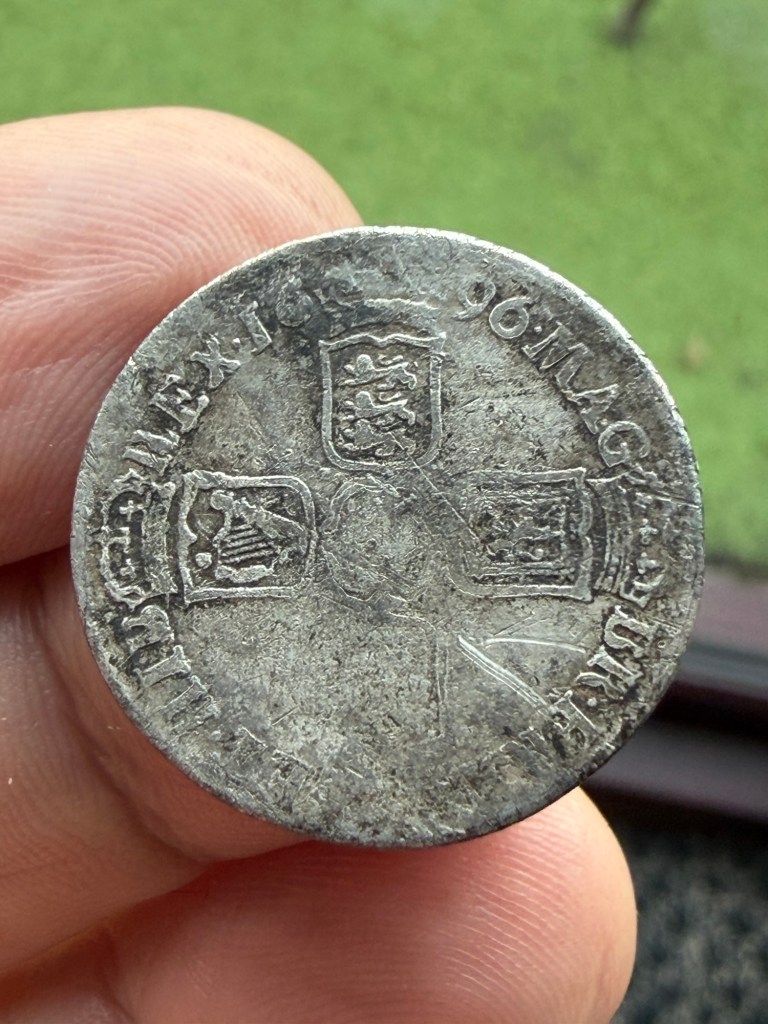
My first example here of a milled rather than hammered coin is this silver shilling of William III, dated 1696. It was struck at the Royal Mint in London during the period when machine-made coinage was replacing the older hand-struck hammered coins.
The shilling is particularly interesting because 1696 was the year of the Great Recoinage, when the government attempted to replace the heavily clipped and worn silver coinage then circulating in Britain.
It therefore belongs to an important transition in British numismatic history: from the irregular hammered coins of earlier centuries to the more precisely manufactured milled coins that would become the norm.

